The Schatzkammer: ten rooms, two Bavarian crowns, and one that came from England
The Treasury is the part of this address people are most often surprised by, because it is sold as a third of a combination ticket and behaves like a museum in its own right. Ten rooms, on the ground floor of the King’s Building, holding what a ruling family kept when it kept anything: crowns, insignia, goldsmiths’ work, and objects that were never meant to be looked at by anybody outside the household.
A will from 1565 is why any of this still exists
Treasuries are usually a story about acquisition. This one is a story about a legal instrument. Duke Albrecht V — the same duke who was building the Antiquarium a few years later — wrote a will in 1565 that set the dynastic jewels aside as an unsaleable treasure. Not a collection policy: a prohibition on selling.
That is the whole reason there is anything in the cases. Ruling families in financial trouble sell the plate first, and a document that makes the plate unsellable is the difference between a treasury and an inventory of things that used to be here. The collection was then extended to its full extent in the early 19th century, when the insignia of the new Kingdom of Bavaria were added to it — a duchy’s hoard becoming a kingdom’s regalia inside the same rooms.
Albrecht V is the connecting figure of this whole building. The will of 1565 is his, and so is the sculpture hall built from 1568 to 1571 upstairs on the museum route (the Antiquarium).
21 June 1958, and what that date tells you
The Treasury reopened to the public on 21 June 1958, and the operator describes it as the first restored part of the museum after the war. Read that sentence twice. It is not a note about a refurbishment. It is a note about how much of this address had to be put back, and about the order somebody chose to put it back in: the treasure first, and the rest of the museum after it (what the war did to this building).
What is actually in the ten rooms
Four named highlights give a fair sample of the range:
- The Crown of the Kings of Bavaria. Part of the insignia added in the early 19th century, when the electorate became a kingdom.
- The Crown of the Queens of Bavaria. Its companion, from the same moment.
- A Statuette of St George. Goldsmiths’ work rather than regalia, and the kind of object the 1565 will was written to protect.
- An altar ciborium. A reminder that a court treasury and a court chapel were the same household’s property — the Hofkapelle in this building is still used, for concerts (which hall each one uses).
What the four names give you is the shape: regalia at one end, devotional and decorative goldwork at the other, several centuries of both.
The Crown of Princess Blanche, and what to look for
The single most famous object in these rooms is a small gold crown, and it is worth knowing what you are looking at before you reach the case: eighteen centimetres of English goldsmiths’ work, in Bavaria since 1782 — one of the objects a guide stops at, and easy to walk past without one.
It is gold, 18 cm high and 18 cm across. It probably dates to 1370–80, and it was restored in 1402 before a wedding. It came to the Wittelsbachs in 1402 as the dowry of Blanche of England, daughter of Henry IV, on her marriage to Louis III, Elector Palatine. It has been kept in the treasury of the Munich Residenz since 1782. And the phrase that description uses for it is the oldest surviving royal crown known to have been in England. It is described as the oldest surviving royal crown known to have been in England, and it probably belonged first to Anne of Bohemia, Richard II’s queen.
Four things worth having straight before you stand in front of it:
- It is not “England’s crown jewels”. It is one crown, kept here in Munich, and the phrase belongs to a different collection in a different country.
- Nobody here says it was worn by a queen of England. The sourced wording is that it is the oldest surviving royal crown known to have been in England, which is a claim about where an object has been rather than about whose head it sat on.
- The date is a probably. 1370–80 is the estimate the source gives, and it gives it as an estimate.
- It is a story you are told rather than labelled. The palace administration’s own pages describe the room rather than the crown’s English history, so a guide is usually where visitors hear it.
Go and look at the thing itself. Eighteen centimetres across is smaller than the phrase “the oldest surviving royal crown known to have been in England” prepares anybody for.
Ticket, time and the handset
The Treasury has its own ticket at about ten euros, the same as the museum. There is a pair ticket covering the two together and a single ticket covering all three parts of the address, and both save the same amount against buying separately (both sums, written out). The audio guide runs here as well as in the museum, in nine languages, which matters more in a treasury than in a state room: a case of goldsmiths’ work rewards a commentary, and the guided visit brings a person instead.
Allow more time than ten rooms sounds like. It is a slow kind of looking, and people who have hurried the museum route tend to stop dead here (how long the whole address takes). Its hours are the museum’s, not the theatre’s: 9 am to 6 pm in the summer season, 10 am to 5 pm in winter, last entry an hour before closing (both timetables).
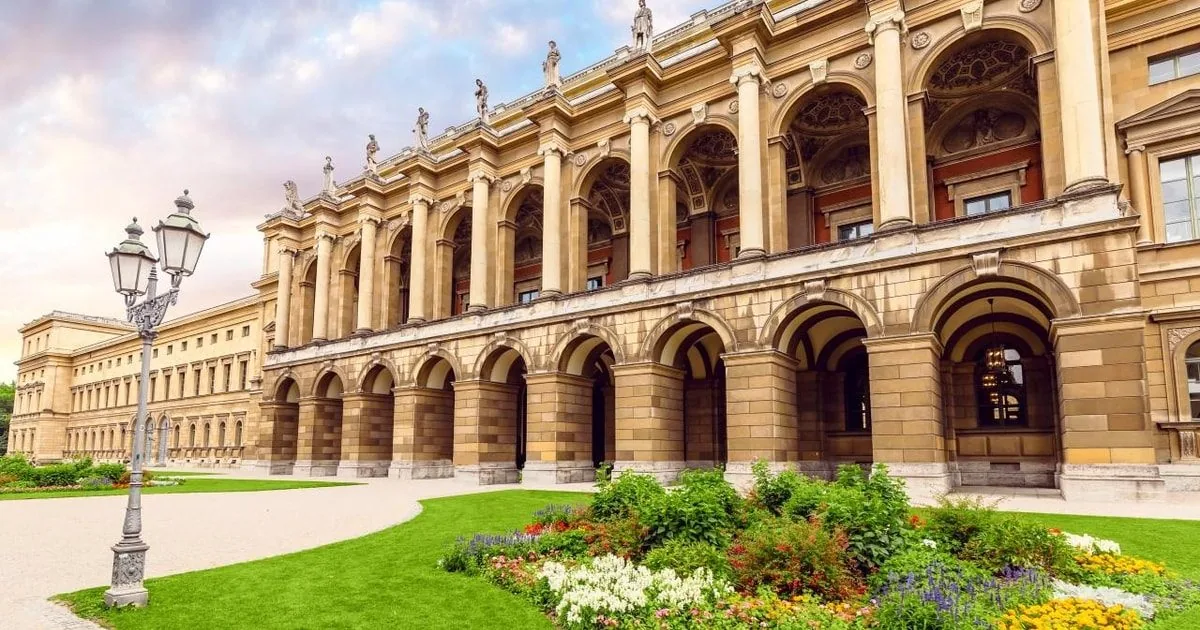 Private, all three parts
Munich: Residenz Palace, Museum and Treasury Private Tour
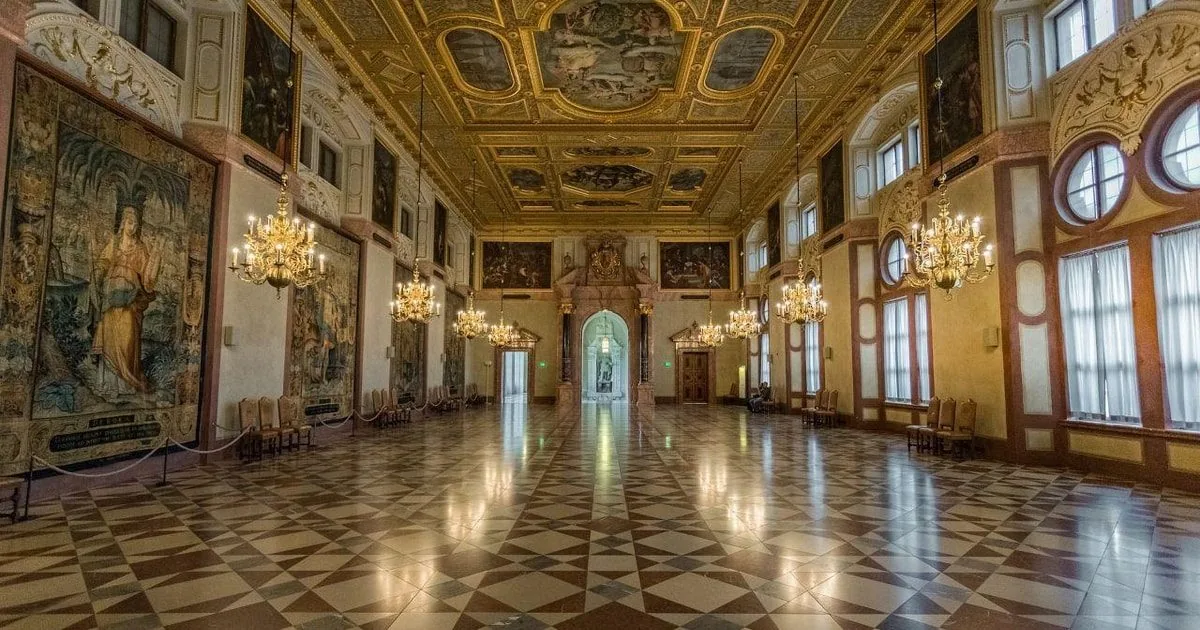 Historian-led
Private Historian-Led Munich Residenz & Treasury Tour
 The guided one
Munich: Residenz Palace and Hofgarten Skip-the-Line Tour
Read on: the museum route next door, the hall the same duke built, whose regalia these are, and the private tour of the museum and treasury, reviewed.
Frequently asked questions
What is in the Munich Residenz Treasury?
Ten rooms on the ground floor of the King’s Building, holding the Crown of the Kings of Bavaria, the Crown of the Queens of Bavaria, a Statuette of St George and an altar ciborium among much else. The collection was founded on Duke Albrecht V’s will of 1565 and extended in the early 19th century with the insignia of the new Kingdom of Bavaria.
What is the Crown of Princess Blanche?
A gold crown, 18 cm high and 18 cm across, which probably dates to 1370–80 and was restored in 1402 before a wedding. It came to the Wittelsbachs that year as the dowry of Blanche of England, daughter of Henry IV, on her marriage to Louis III, Elector Palatine, and has been kept in the Munich Residenz treasury since 1782.
Is the Crown of Princess Blanche part of England’s crown jewels?
No, and the phrase is wrong in two ways. It is a single crown, not a collection, and it is in Munich. The wording that fits it is “the oldest surviving royal crown known to have been in England” — a claim about where the object has been. It probably belonged first to Anne of Bohemia, Richard II’s queen, and that probably is worth keeping.
Is the Treasury included with the Munich Residenz ticket?
Not with the museum ticket on its own. The Schatzkammer is priced separately at about the same as the museum, and there is a pair ticket covering both, plus a single ticket for all three parts of the address — and the guided visit carries all three in its price. The nine-language audio guide covers the Treasury as well as the museum. The tariff.
When did the Munich Residenz Treasury open to the public?
It reopened on 21 June 1958, and the operator describes it as the first part of the museum restored after the war. The wider Residence Museum has been open to the public since 1920. That 1958 date is a useful measure of how much of this building had to be put back. What the war did here.
How long does the Munich Residenz Treasury take?
Longer than ten rooms sounds. It is case-by-case looking rather than a walk through apartments. It keeps the museum’s hours, not the theatre’s, with last entry an hour before closing. How long the whole address takes.